Case Study
The Challenge
In Kempas, Indragiri Hilir — a district in Riau — phone credit, electricity tokens, e-wallet top-ups and game diamonds are bought the old way: you walk up to a counter, say a number, and pay cash. Monthly bills (electricity, water, health insurance, motorbike instalments) usually mean a trip into town. I set out to put all of that into one system that serves two very different customers at once: a buyer on their phone who wants to pay and leave, and a cashier at a busy counter who needs to ring up a SIM card, a pulsa top-up and a bill on one receipt without thinking about it.
The hard part was never the shop front. It was money and trust. Every order moves real rupiah through an outside supplier and a payment gateway, and a single mistake — a double charge, a top-up to the wrong number, a bill paid twice — is money out of the owner's pocket. The system had to be fast enough for a counter and careful enough to never lose track of a single transaction.
My Approach
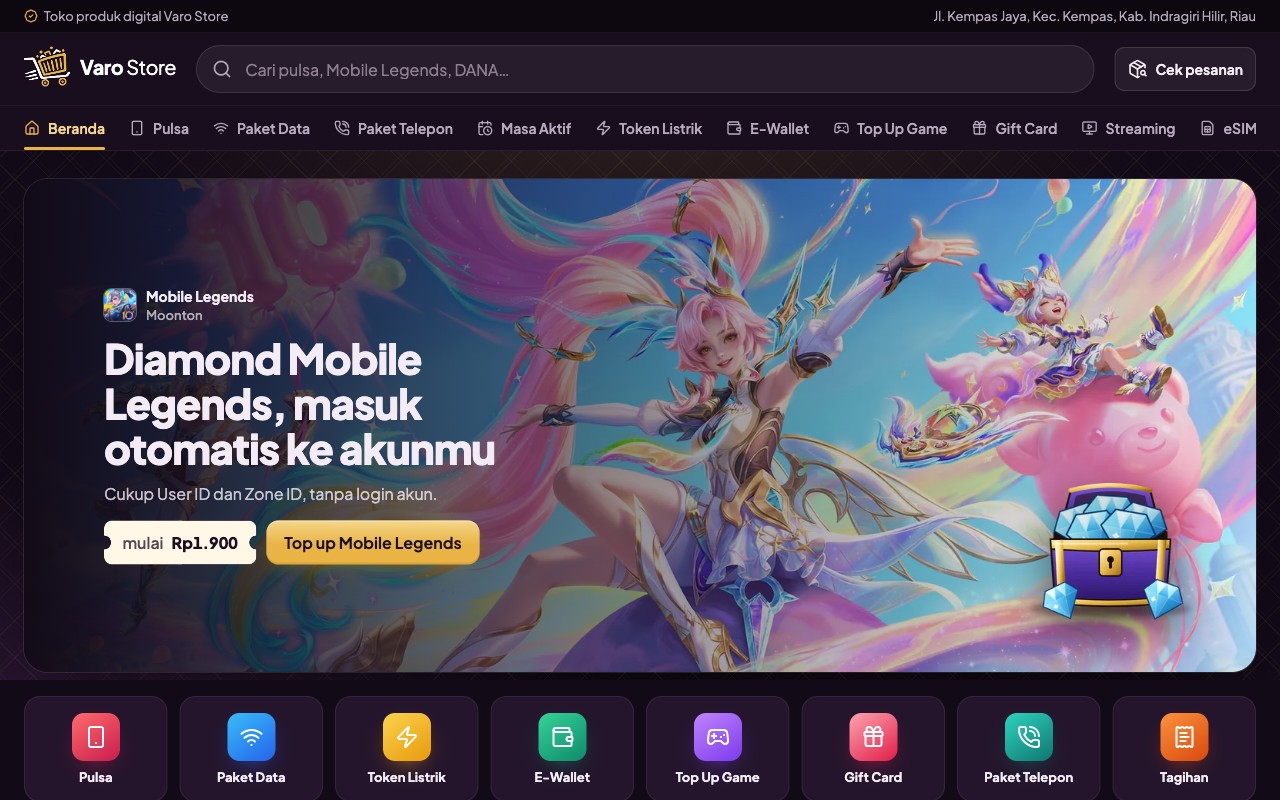
I built Varo Store as one Laravel backend with two front ends on the same Vue 3 codebase: a public storefront and a tablet point-of-sale. Both read from one catalogue and one pricing engine, so a price or a cut-off time is defined once and is true everywhere.
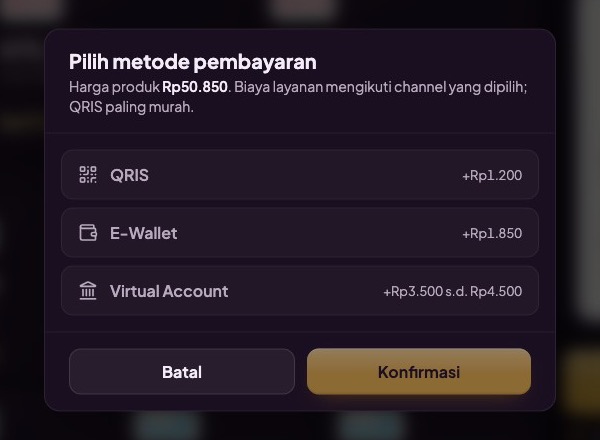
Reliability came first. Each digital product can carry a backup supplier, and a health monitor scores every supplier from the last seven days of orders — how often it succeeds, how long it takes, whether it is rejecting orders or holding them pending. When a supplier goes slow or starts failing, the system fails over to the backup automatically and quietly stops offering the bad one, so a buyer never sees a product that cannot actually be delivered. Pricing is deliberately thin and rule driven: a small fixed margin per category, with the payment-gateway fee passed on to the buyer, the way the big players do it.
The money path is defensive by design. Orders are idempotent, so a lost response is retried without ever charging twice. Bill payments are checked against the biller first and paid with the exact reference the check returned. Every state change — payment confirmed, order sent, supplier answered, refund issued, cash drawer opened — is written to a hash-chained audit trail, so the owner can reconstruct exactly what happened to any rupiah, and tampering shows up as a broken chain.
The Design
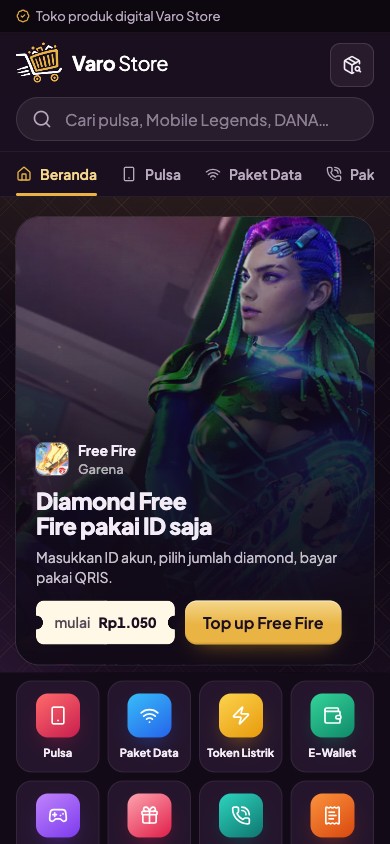
The storefront is operator-first and phone-first. A buyer picks a category, types a number, picks an amount and pays — no account, no login. Games show their official artwork on cover cards; numbers are read back in large grouped digits before any money moves, because a top-up sent to the wrong number cannot be pulled back. After paying, the buyer gets a receipt-style order page they can track, download as an image and share, plus an emailed HTML receipt.
The tablet kasir is built for speed at a counter. One cart takes several digital products and physical goods together, paid once — cash, the store's QRIS or bank transfer — and prints a 58 mm or 80 mm thermal receipt. The cashier sees elapsed time while a supplier works, and plain instructions for what to do if one fails. The owner runs everything from a web panel and a Telegram bot: every order, the cash in the drawer, the stock on the shelf, and an alert the moment a supplier starts misbehaving.
Reliability & Correctness
The catalogue holds 5,900+ products across phone credit, data, e-wallets, games with official art, electricity, and dozens of bill providers — water utilities for hundreds of regions, property tax, multifinance instalments, pay-TV and more. Behind it sits a backend covered by 1,849 automated tests that pin down the parts that touch money: idempotent ordering, the bill check-and-pay handshake, supplier failover, the cash drawer, refunds, and the audit chain. Payments run across 12 channels — QRIS, two e-wallets and nine bank virtual accounts — each with its fee shown to the buyer up front.
The Results
Varo Store is live at varostore.com, serving a real store and real customers. It replaces a cash-only counter with a system that sells online and in person from one catalogue, keeps thin and honest margins, and never loses track of a transaction. It is the system I reach for when I want to show what production looks like under my hand: not a demo, but money, stock and trust held together by tests and an audit trail. Source code is private; the running product is the proof.